

T.A.P. Density as Obtained with the GeoPyc
The density of a material is defined as its mass divided by its volume. The bulk density of powdered and granular materials is often measured by the “tap” density method1. A material’s tap density is obtained by filling a container of known volume with a known mass of sample and vibrating it. This value is […]
Diversity of Applications of the GeoPyc 1360
The GeoPyc® 1360 measures the envelope density (sometimes called bulk density) of rigid and semirigid, porous materials. Unlike absolute density, which excludes the volume of pores and small crevices, envelope density is the mass of an object divided by its volume including the pore volume. When the sample’s absolute density (sometimes called skeletal, true, or […]
Determining Diffusivity by Breakthrough Measurements Using the Zero Length Column Method
Mass diffusivity into and among particles often dominates how adsorbents perform. Effective materials and processes for adsorption, catalysis, gas separation, and direct air capture can be developed more quickly and perform better when mass-transfer is well-understood. Breakthrough is a valuable tool for measuring adsorption in dynamic conditions and can more closely mimic real world process conditions compared to […]
Sample Grinding: What Happens to Surface Structure When a Material is Ground
What happens to a material when it is physically modified? Four materials were ground and sieved to create four particle size ranges. The unmodified material and these four size ranges were analyzed to obtain density, surface area, and porosity values. The AccuPyc II, a gas pycnometer, was used to obtain the sample density. Surface area […]
Higher Accuracy Plus Faster Results When Measuringthe Density of Commercial Items

Density measurements have proven their value in a number of industries on a wide variety of materials. The AccuPyc 1330 can analyze organic or inorganic samples with a vapor pressure of less than 25 mmHg. Using helium gas, volumes of these materials can be measured to a precision of ± 0.02% with relative ease. As […]
Volume Measurement Method Affects Density Result
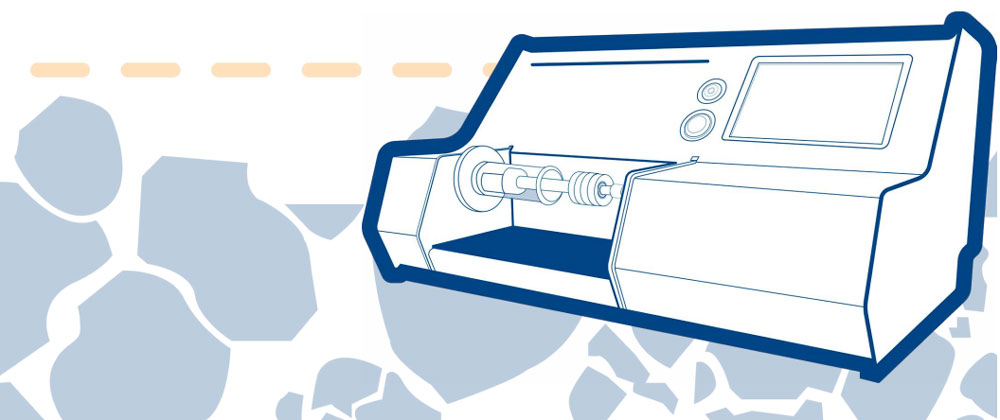
Density is a basic and important material property. While the true density of a pure substance is easily conceptualized and well-understood, it is not the only density that is important for engineers and material scientists. It is also worthwhile to measure an effective density for bulk materials as packed, transported, or used. For granular, porous, […]
The Role of Calibration When Using the GeoPyc 1360
During the initiation of an analysis, the GeoPyc® 1360 prompts the user to enter a conversion factor. The GeoPyc Operator’s Manual and Quick Reference Guide give an adjusted conversion factor for each chamber. Using these conversion factors should yield reliable and reproducible results for most sample types. To obtain closer agreement with established methods, however, you […]
Agreement of GeoPyc® Data with Other Methods
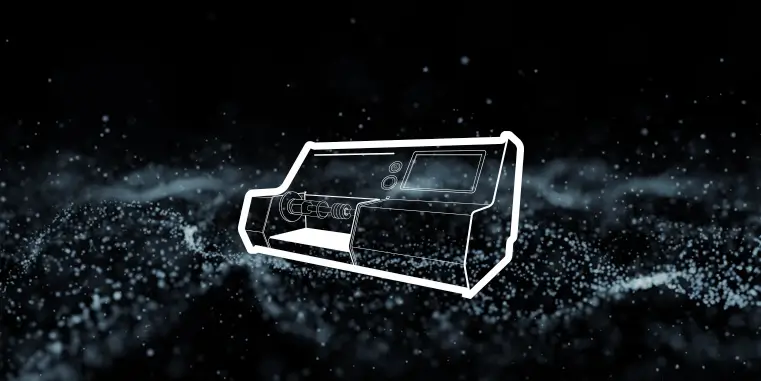
Envelope density is not an intrinsic property of a solid; its value depends on the method of measurement. Agreement of results between the various methods available for determining envelope density can vary widely. One factor determining how closely results from available methods agree is the shape and internal structure of the sample. Consider the following […]
Sample Preparation for Gas Pycnometry
A gas pycnometer determines the volume of a material by measuring the pressure change of an inert gas within two calibrated volumes. Density is calculated from the measured volume along with the mass of the sample. Prior to analyzing, the gas pycnometer purges the sample with an inert gas to clean atmospheric gases, such as […]
A Novel Scale-Down Agitated Filter Bed Dryer for Evaluating Crystal Breakage in the Pharmaceutical Industry
Crystalline products are widely used in the pharmaceutical industry as active pharmaceutical ingredients (APIs). However, these products are often susceptible to mechanical damage during isolation and drying processes, such as agitated filter bed drying (AFBD). AFBD involves the use of an impeller to promote uniform drying of the wet cake by intermittent agitation. However, the […]


