

Can I Calculate Density From Free Space
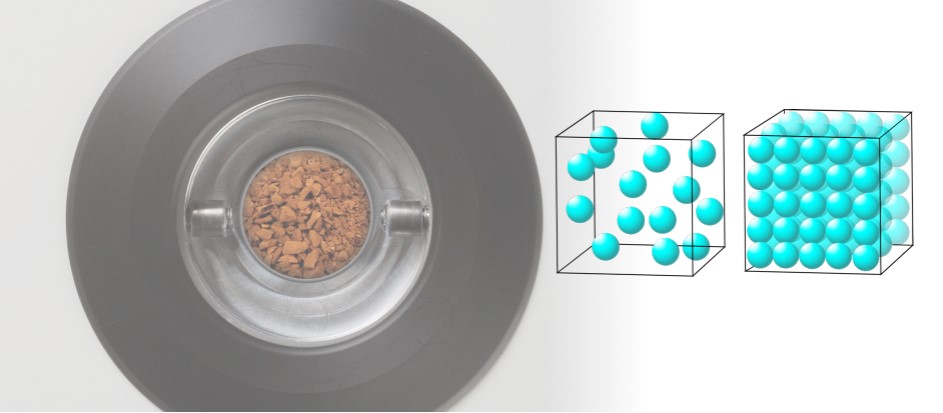
A frequent question is often posed by users, can density be calculated from free space measured on a gas adsorption analyzer instead of using an instrument that is designed to obtain density? This tech note will explore the possibility of using such a method and compare with results obtained by the Micromeritics AccuPyc II. Gas […]
Asphalt Density Using AccuPyc II TEC
Abstract Measuring asphalt density per ASTM Test Method D70-09 requires the use of a glass pycnometer and very tedious analysis conditions. Using this ASTM method as a guide, the density of asphalt is measured using an AccuPyc II TEC and 3.3-cc disposable aluminum cups. The density results of four different asphalt samples using the AccuPyc […]
Expanding the Material Characterization “Toolbox” for Excipient and Active Pharmaceutical Ingredient (API) Vendor Qualification
Physical characterization of pharmaceutical excipients is not only a requirement but can also provide data that can be predictive in nature regarding the performance of final dosage forms including tablets, capsules, inhaled dosage forms, transdermals, and others. Manufacturers generally provide some of this physical testing data, such as particle size. In the case of particle […]
Using the GeoPyc T.A.P. Density Analyzer to Measure Bulk Density and Packing Volumeof Mixed Food Powders
Micromeritics’ GeoPyc 1360 T.A.P.TM Density Analyzer accomplishes essentially the same measurement as a noisy, vibrating tap density device, but it operates in an entirely different manner. It also can provide additional information. Analysis with the GeoPyc is quick, easy, automatic, and quiet. To determine the T.A.P. density of a powdered or granular material, sample is […]
Sample-Weighing Precision with the AccuPyc 1330, 1-cm3Capacity
The AccuPyc 1330 Series pycnometers allow you to enter a sample mass (weight) determined to four decimal places. Four decimals are sufficient even when working with small sample masses; it is not necessary to use additional decimal places. This application note explains why. Density of a material is defined as the mass of material per […]
Envelope Density Measurements by GeoPyc 1330 and Other Methods
The mass of an object divided by its volume is its density (g/cm3). The result is called the envelope density (sometimes the bulk density) when the object’s volume is determined as if a thin film surrounded it and blocked access to pores in the object. When all pores are open and freely accessible so that […]
Bulk and Skeletal Density Computations for the AutoPore
Mercury porosimetry as performed by the AutoPore is primarily intended to measure the total volume of pores within a sample between an upper and lower limit of pore sizes with a 1% accuracy level. In addition to porosity, mercury porosimetry also is often used to measure the bulk density and the skeletal density. Relative to […]
Gas Pycnometer Analyses with Various Gases on the AccuPyc II
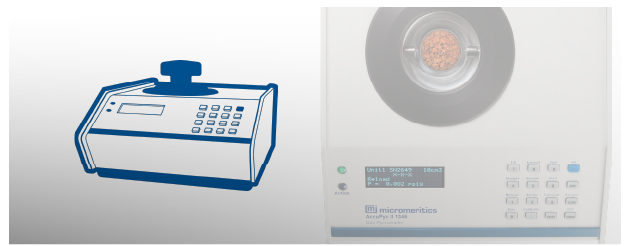
Helium is the most used gas for pycnometry due to its ideal behavior; However, there are times where helium can be substituted for other gases. Helium has the ability to permeate into pores that are closed from the surface and interacts with some organic materials and microporous carbons. Nitrogen is the second most common gas, […]
Analyzing Samples that Occupy Less than 10 Percent Cell Volume on AccuPyc II

Samples measured by the AccuPyc should occupy more than 10 percent of the measured cell volume for the most accurate results. This can be difficult to obtain if a low sample quantity is available or if the sample bulk density is low. The cell volume is determined through the volume calibration process and is dependent […]
Consolidation Force on the GeoPyc when Measuring Foams
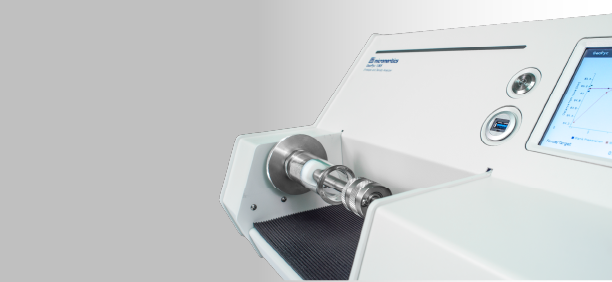
One of the biggest challenges with density analyses involving foams is compression. Determining the skeletal and envelope density of a foam must be performed in a manner where material compression is not significant. ASTM D6226 requires foams to be analyzed, with a gas pycnometer, at a pressure of 2.9 PSIG (20 kPa) and it is […]


